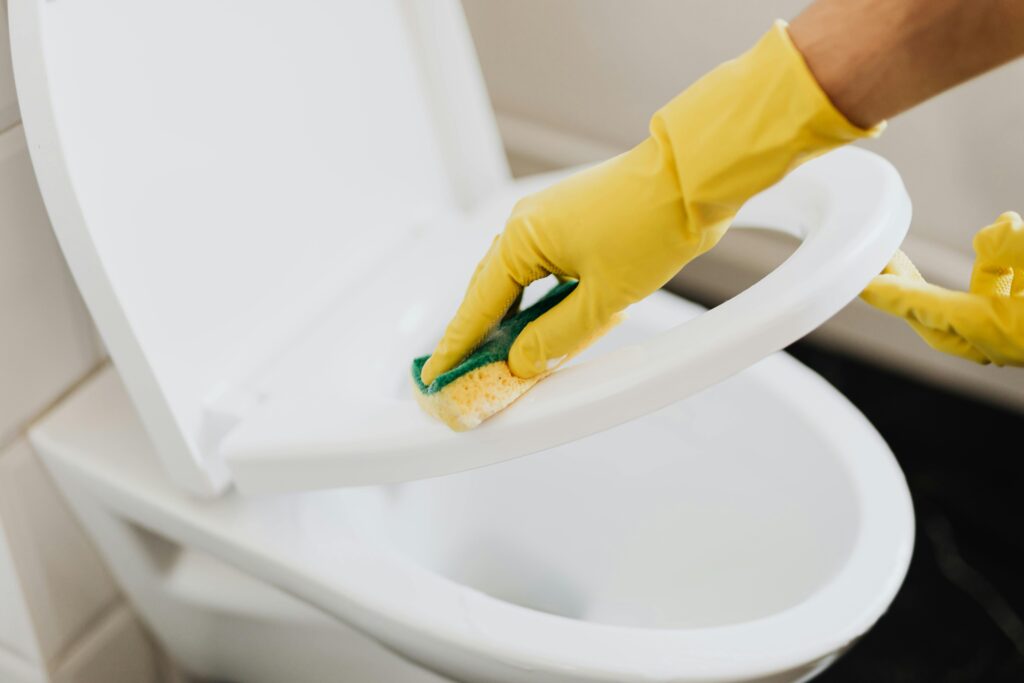
If you have MCS (or you’re just extremely sensitive to smells), cleaning the bathroom can feel like a trap:
Most “bathroom cleaners” smell strong… and strong smell can mean days of symptoms.
This is how I clean my bathroom in a way that keeps things sanitary without turning my house into a chemical cloud.
Quick note: I’m sharing what I’ve personally found helpful living with chemical sensitivity — not medical advice. Everybody’s triggers are different, so go slow and test one thing at a time.
Also: if you’re trying to explain MCS/fragrance sensitivity to someone who hasn’t lived it (family, friends, landlord, workplace), I added a few credible references at the bottom. They’re not there to “prove” anything — they’re there to make these conversations easier.
My bathroom-cleaning mindset (what made the biggest difference)
1) I keep it simple.
The more products I used, the more I reacted — and the harder it was to know what caused it.
2) I clean more often, but with gentler steps.
For me, a quick “maintenance clean” beats a big intense clean with harsh fumes.
3) Low smell matters more than “natural.”
Some “natural” things still wreck me — and for me, essential oils are a hard NO. Even small amounts can make me very sick. Vinegar is different for my body: I use it a lot for spot cleaning or smaller areas, then I walk away and air it out (window/fan). The smell clears fast for me, so it’s one of my go-tos.
4) Ventilation isn’t optional.
If I’m cleaning, I crack a window/door and use a fan when possible.
What I keep on hand
These are the basics that cover most of what I need:
- Baking soda (gentle scrub / paste)
- Hydrogen peroxide 3% (low-odor soak or wipe for some messes)
- White vinegar (spot cleaning for small areas — I open a window/turn on a fan and walk away while it airs out)
- Borax (soak/boost for grime — avoid breathing dust, use gloves)
- Washing soda (stronger than baking soda; good for heavy grime; can irritate)
- Hot water + microfiber cloths (honestly underrated)
- A toilet brush
- A toilet-safe pumice stone (for mineral rings — keep it wet)
Optional (if you tolerate it): steam cleaner for surfaces and grime without added scent.
Quick surface safety note (so you don’t ruin your stuff)
I’m fragrance-sensitive, but I also don’t want anyone to accidentally damage their home. A few basics:
- Vinegar (acidic): Great for glass/mirrors and some spot cleaning, but it can etch/dull marble, limestone, and travertine. On granite, it’s usually okay if the stone is well-sealed, but I still don’t let it sit and I often do a quick water wipe after.
- Pumice stone: Works amazingly on toilet mineral rings, but use a toilet-safe pumice and keep it soaking wet. Test a small area first — too much pressure can scratch.
- Hydrogen peroxide (3%): Can lighten/discolor some fabrics or certain finishes. I spot test if I’m unsure and I rinse/wipe after.
- Borax / washing soda (alkaline powders): Can be irritating to skin and can dull some finishes if left sitting. I use gloves, avoid breathing dust, and rinse well.
When in doubt: spot test in a hidden area first and ventilate.
The one safety rule I never break
I never mix cleaners. Ever.
Especially: never mix bleach with anything, and don’t combine random products because “the internet said it’s fine.”
If I’m switching from one method to another, I rinse first and give the bathroom air time.
My actual routine (what I do, step by step)
1) Quick reset (5 minutes)
This is my “keep it from getting gross” routine.
- Wipe sink + counter with hot water and a microfiber cloth
- If needed: sprinkle a little baking soda for stuck spots, then wipe clean
- Quick wipe of the toilet exterior (seat, lid, handle area)
- I finish by rinsing the cloth well and letting the room air out
2) Sink + faucet grime
- Baking soda paste (baking soda + a little water)
- Gentle scrub
- Rinse well (residue is a trigger for me)
- For hard-water spots, I’ll spot-clean with vinegar, then rinse and let it air out.
3) Shower/tub day
- Hot water rinse first
- Baking soda paste for soap scum areas
- Rinse thoroughly
- If I’m dealing with mildew-ish spots: hydrogen peroxide can help (apply, let sit briefly, wipe/rinse)
I’m careful here because even low-odor products can feel “sharp” in a steamy bathroom.
The big one: stubborn toilet stains (what I do when scrubbing isn’t enough)
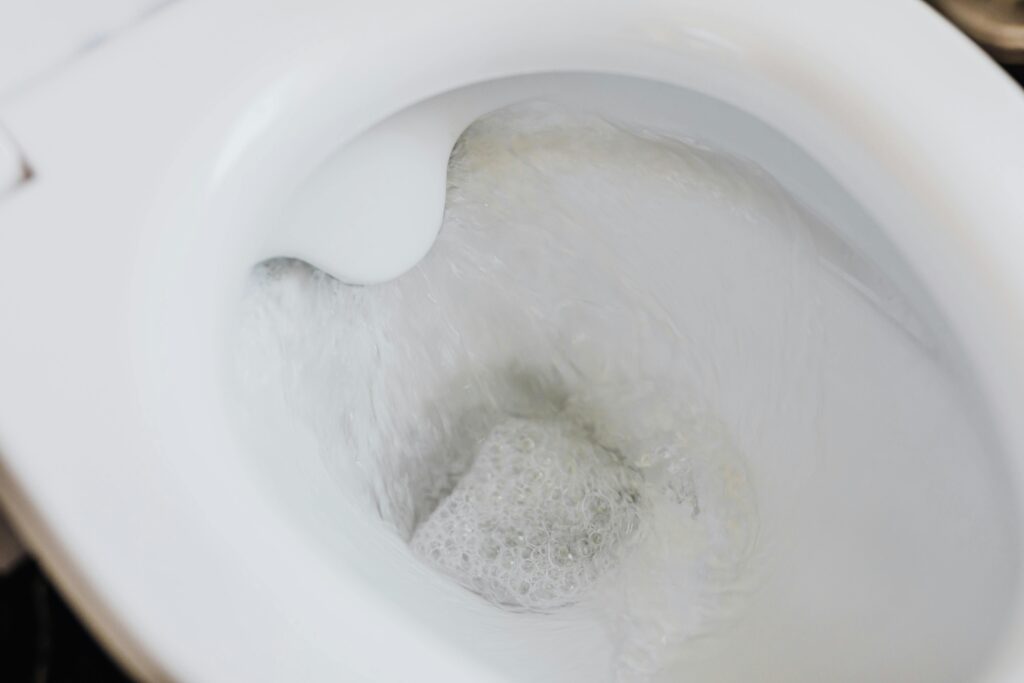
First — toilet stains aren’t always the same thing, so I try to match the method to the stain:
What kind of stain is it?
- Chalky/gray/white ring = usually hard-water mineral buildup
- Orange/rust = often iron in water
- Dark staining = mineral + grime buildup
Step 1: Lower the bowl water (makes everything easier)
- Turn off the water valve behind the toilet
- Flush and hold the handle down so the bowl stays lower
Step 2: Try the lowest-odor option first (mechanical)
Toilet-safe pumice stone (for mineral rings)
- Keep the stone and surface soaking wet
- Use gentle pressure
- Test a small area first
This is one of the best options because it’s mostly physical removal, not fumes.
Step 3: If I need a soak
Pick one of these. Simple is better.
Borax soak
- Sprinkle into the bowl
- Let sit 20–30 minutes
- Scrub and flush
(Gloves help; avoid breathing the powder.)
Hydrogen peroxide soak (3%)
- Pour enough to coat the stain area
- Let sit 15–30 minutes
- Scrub and flush
Baking soda paste
- Helps more with grime than deep mineral rings, but it’s gentle and low smell
- Scrub, then rinse/flush
About vinegar and citric acid (real talk)
- Vinegar: I personally tolerate vinegar really well for spot cleaning and small areas, as long as I ventilate (window/fan) and walk away while it airs out. The smell clears fast for me, so it’s one of my go-tos. That said, I know some people with MCS can’t tolerate vinegar fumes at all — so if that’s you, skip it.
- Citric acid: Some people avoid citric acid because it’s commonly produced using a fermentation process (then purified). If you’re extremely mold-reactive and don’t want to risk it, you can skip it and still get good results with pumice + borax + peroxide.
What I don’t use (because it backfires for me)
- Fragranced bathroom sprays
- “Fresh scent” products (even if they claim “clean ingredients”)
- Plug-ins/candles to “cover” smells
- Anything that clings to fabric (bath mats, towels, shower curtains… it spreads)
If you’re sensitive like me, here’s the part that matters
I’m not aiming for a perfect bathroom. I’m aiming for:
- clean enough to feel good
- no lingering smell
- no flare-up afterward
- no mystery residues
That’s the survival guide part.
Want to help me build a community list?
If you have a bathroom-cleaning method that works for you (especially for toilet stains), tell me in the comments:
- What you used (ingredient/tool)
- What it smelled like (if anything)
- Whether it lingered
- How sensitive you are (mild/moderate/severe)
I’ll keep updating this post as I learn.
Further reading (credible sources)
If you want a quick, credible overview of MCS/fragrance sensitivity (or you need something to share with someone skeptical), here are a few solid references:
- Multiple Chemical Sensitivity (MCS) overview (Johns Hopkins Medicine)
- MCS overview + symptom context (Cleveland Clinic)
- OSHA overview (notes the controversy/debate, defines terms)
- Workplace accommodation for fragrance sensitivity (Job Accommodation Network)
- Environmental sensitivities + scent-free policies (Canadian Human Rights Commission)
- Cleaning supplies, VOCs, and indoor air impacts (American Lung Association)
(Optional, more “research-y” reading:)
Related posts on HealNoMeds
If you want to read more about why I’m so careful with cleaning products (and not just fragrance), this explains it:
It’s Not Just Fragrance: The Hidden Chemicals That Make Us Sicker (and What to Do About It)
Some DIY resources (not MCS-specific)
These are popular DIY references, but they’re not written for MCS. If you’re sensitive, you may need to skip vinegar-heavy ideas, avoid powders in the air, and ventilate well.
- “Crucial facts about cleaning with borax” (Electrodry blog): click here.
- Borax cleaning video (Clean My Space):
Interested in more?
If you want to read more about why I’m so careful with cleaning products (and not just fragrance), this explains it:
It’s Not Just Fragrance: The Hidden Chemicals That Make Us Sicker (and What to Do About It)